
Guide
Volatility scalping
Filter out inactive markets and focus only on instruments with enough range, liquidity, and current movement.
Disclaimer and responsibility
- The scenarios in this guide are educational examples, not financial advice and not a promise of profit.
- WatchlistTop can help structure market analysis, but every concrete trading decision is made by the trader.
- The trader is responsible for position size, leverage, stop placement, exchange risk, liquidation risk, and the consequences of each trade.
- Crypto assets and futures are high-risk markets. A strategy can produce losses even when all screener conditions look valid.
Market
Liquid spot and futures. The method is about selection, not direction.
Timeframes
- Ranking: 15m and 1h are useful for stable intraday volatility.
- Entry: 1m/5m for scalping, 15m for slower setups.
- Context: 1h to understand whether volatility happens inside a range or during trend expansion.
Screener tools
- "NATR", "V24", "P24", relative volume, and trade-count metrics.
- Charts by sorted list to scan the best candidates visually.
- Absolute-value sorting for columns that can be negative.
- Alerts to notify when a quiet coin becomes active.
- "All charts" the graphics mode switch on the desktop and the button in the mobile cap.
Basic setup
- Enable volatility-related columns and keep the list sorted by the metric that matches your current task.
- Use absolute-value sorting when both strong upward and downward movement are interesting.
- Exclude illiquid symbols from the working list before relying on volatility ranking.
- Use charts by sorted list when the list tells you where to look but the chart must confirm structure.
- Before using the volatility ranking, remove illiquid coins from the list: a high NATR can come from a thin orderbook rather than genuine market interest.
- After sorting, open "All charts: the list shows where to look, and the mini-graph confirms the structure of the level, the read input and the volume.
How to read the setup
- High "NATR" means the instrument has range, not that the next trade is automatically good.
- A good candidate combines volatility with volume and readable chart structure.
- If volatility is caused by one already finished candle, the setup can be late.
When to skip
- Avoid coins where volatility comes from wide spreads and thin liquidity.
- Avoid entries when high volatility appears directly after a finished news spike.
- Do not use volatility ranking as a direction signal.
Risk management
- Higher volatility usually means wider stop or smaller size.
- Decide the maximum acceptable loss before choosing the coin, not after seeing a fast move.
- If spread is wide, account for execution slippage in position size.
Screenshots
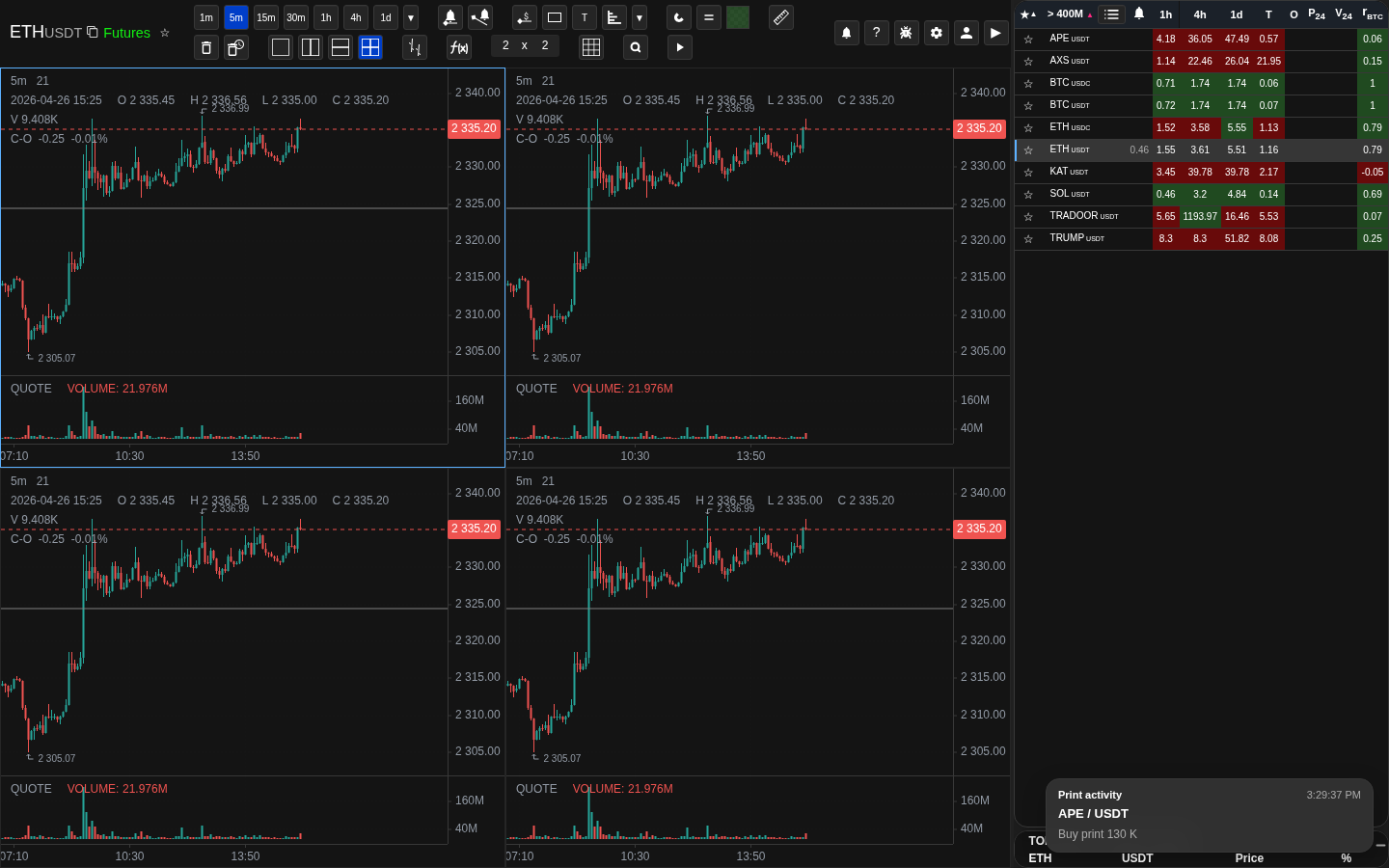
Volatility metrics
NATR and Pavg help compare range across coins.
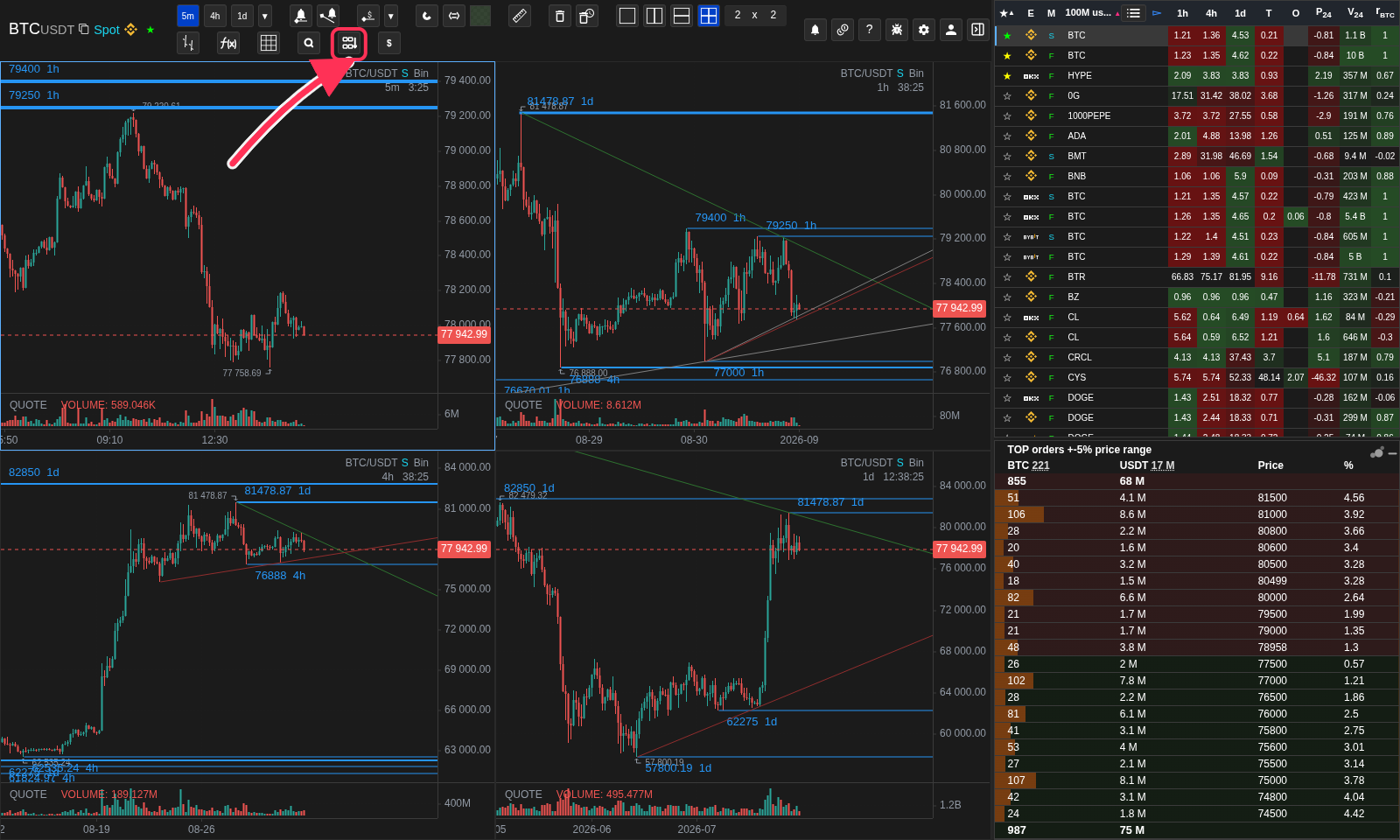
All charts
The "All charts" mode helps to quickly check the structure of several candidates in the current sorting order.