
Guide
Overheated futures through OI and Funding
Find futures where price, open interest, and funding show crowded positioning.
Disclaimer and responsibility
- The scenarios in this guide are educational examples, not financial advice and not a promise of profit.
- WatchlistTop can help structure market analysis, but every concrete trading decision is made by the trader.
- The trader is responsible for position size, leverage, stop placement, exchange risk, liquidation risk, and the consequences of each trade.
- Crypto assets and futures are high-risk markets. A strategy can produce losses even when all screener conditions look valid.
Market
Perpetual futures only. Spot pairs do not have futures OI and funding.
Timeframes
- Context: 1h, 4h, and 1d levels.
- OI comparison: 1h for short-term acceleration, 12h/24h for broader positioning.
- Entry observation: 5m or 15m after price reaction or failed continuation.
Screener tools
- Funding column "F".
- Open Interest column in Change mode.
- "P24", "V24", and "NATR" to confirm that the coin has moved enough to be crowded.
- Levels and trend lines to avoid trading overheat in the middle of nowhere.
- Orderbook and large orders to confirm reaction near a price area.
Basic setup
- Enable futures instruments and the "F" and "OI" columns.
- For OI, compare 12h or 24h when searching for broad overcrowding; use 1h when searching for fast squeeze risk.
- Sort by funding or OI change, then check price extension with "P24" and "NATR".
- Open the chart and confirm that the instrument is near a level, trend, or visible liquidity area.
How to read the setup
- High funding plus strong price movement plus rising OI means the market can be crowded in the direction of the move.
- Crowded does not mean immediate reversal. It means late entries need stricter risk and confirmation.
- The best overheat setups usually need a failure signal: rejection, failed breakout, loss of momentum, or liquidation-like move.
When to skip
- Do not trade against the trend only because funding is high.
- Do not ignore the next higher-timeframe level: price can stay overheated longer than expected.
- Avoid low-liquidity futures where funding and OI are unstable or unreliable.
Risk management
- For counter-trend overheat trades, risk should be smaller than for trend-following setups.
- Use clear invalidation beyond the rejection area, not a wide stop based only on hope of reversal.
- If funding is extreme but price keeps accepting higher/lower levels, step aside until the structure changes.
Screenshots
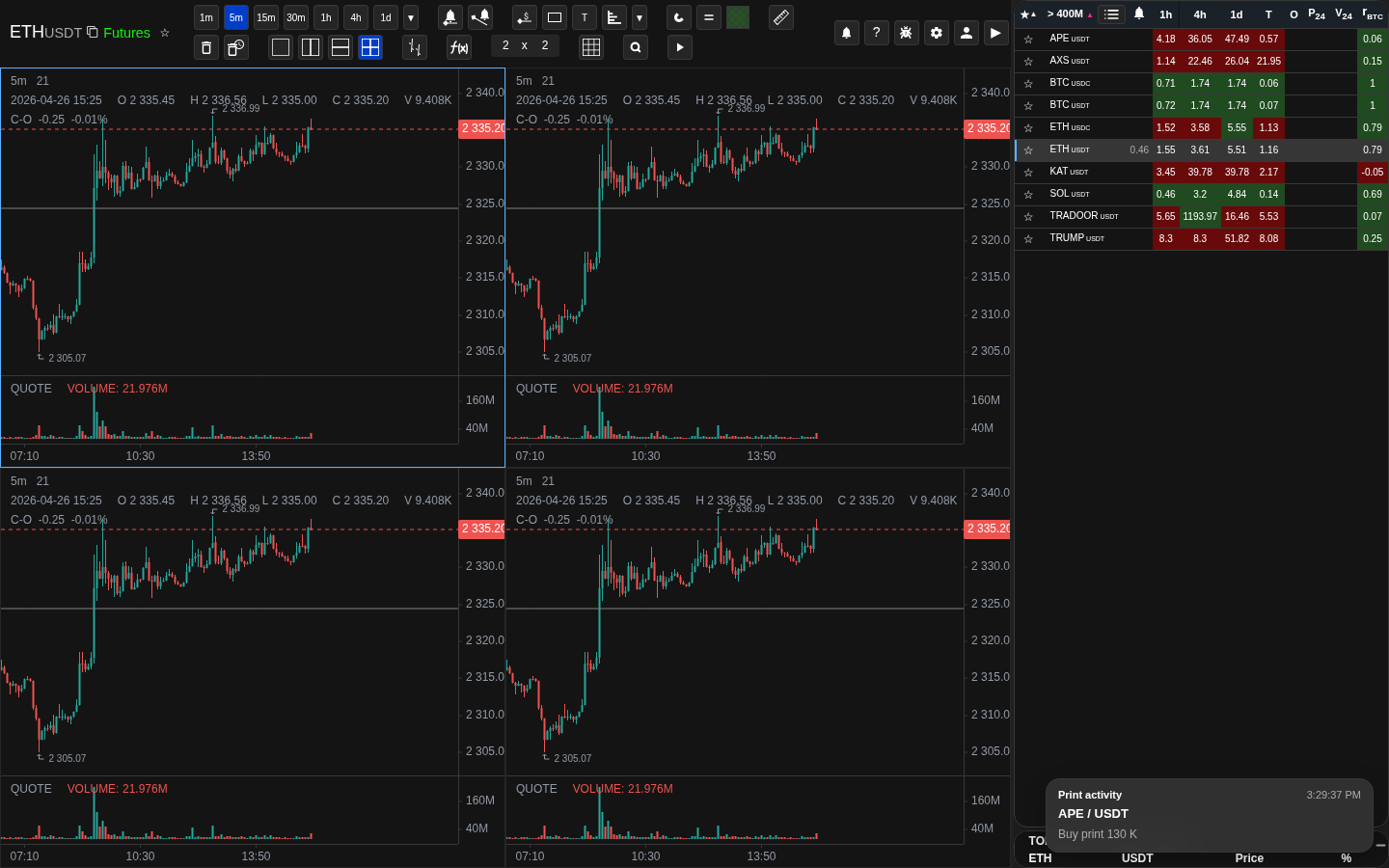
OI and Funding columns
Use futures-specific columns together with price and volatility metrics.
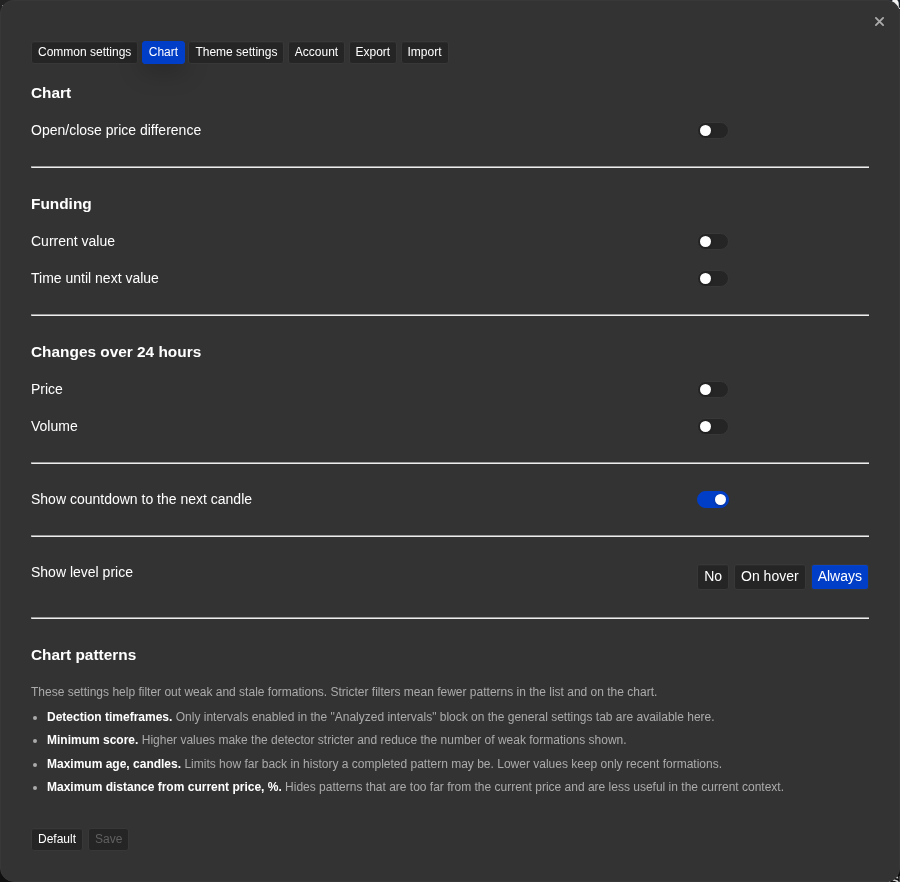
Metric settings
OI and metric windows affect how the list ranks futures.